
Regular blog here, 'microblog' there
Many of my traditional blog post live on this site, but a great majority of my social-style posts can be found on my much-busier microbloging site at updates.passthejoe.net. It's busier because my BlogPoster "microblogging" script generates short, Twitter-style posts from the Linux or Windows (or anywhere you can run Ruby with too many Gems) command line, uploads them to the web server and send them out on my Twitter and Mastodon feeds.
I used to post to this blog via scripts and Unix/Linux utilities (curl and Unison) that helped me mirror the files locally and on the server. Since this site recently moved hosts, none of that is set up. I'm just using SFTP and SSH to write posts and manage the site.
Disqus comments are not live just yet because I'm not sure about what I'm going to do for the domain on this site. I'll probably restore the old domain at first just to have some continuity, but for now I like using the "free" domain from this site's new host, NearlyFreeSpeech.net.
 I've used OpenBSD as my primary desktop OS before, but it's been a long time. Since then my main laptop has run Linux -- a bit of Fedora and Ubuntu and a whole lot of Debian.
I still dabble in OpenBSD, and I've done a few installs of version 5.2 recently on older test hardware.
I love the whole vibe of the project: the care that is taken with the base system and even the ports and packages that you add later, the like-clockwork development schedule that puts incremental improvement and not breaking things ahead of whiz-bangery, the best documentation anywhere (they care about the man pages and offer a by-your-own-bootstraps FAQ).
It feels solid. I've run every BSD I could at one time or other (FreeBSD, NetBSD, DragonFlyBSD, PC-BSD, GhostBSD, DesktopBSD) and have had more success with OpenBSD than any other. That's me. And my hardware.
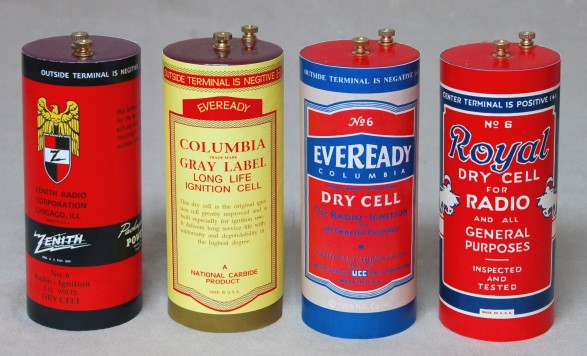
I've had the Lenovo G555 for about 2 3/4 years at this point, and I've had another part fail -- the battery.
A laptop battery losing its ability to hold a charge after two years is by no means unusual.
Laptop batteries can be pricey. I've seen them go for -- and that's for a computer that's worth maybe .
When my LCD power inverter went when I had the Lenovo for about two years -- a bit early -- and I was able to replace what is usually a part by spending and change on eBay, I decided to look around before committing to a new battery.
I saw aftermarket batteries going for anywhere from to . That's quite a range. Some claimed to be better. Those offered a two-year warranty. Most of the time, it would take another to in shipping to complete the transaction.
I'm experimenting with a feed out of this Ode site whose sole purpose is to originate and archive my posts to social-media services such as Twitter.
Ideally I will be pointing the RSS of a specific subset of posts either at Twitter directly, or at http://dlvr.it, and the only things I will be posting to social networks will both originate and live here.
This is a "push" system that doesn't gather any responses to these social-media postings, but I could always gather and repeat that history here, provide a link to same, or just forget about it and be happy having my "original" posts contained within this portion of my Ode blog.
Later: The super long URL in the header ran right out of the box, so I used bit.ly to shorten it.
The link referenced in the title is the URL to this very entry: http://stevenrosenberg.net/blog/social/posts/2013_0220_twitter_out_of_ode
Even later: problems with this method include: The link doesn't track from the blog to Twitter. Instead the Twitter post goes back to this blog entry. That might not be so bad -- Any link I want can be at the top of the blog post, and the reader can go from Twitter, back here, then to the outbound link.
But it would be better to at least have the flexibility of originating a Twitter post with a unique link and pushing that to the social-networking service rather than a link to a blog post. There is probably some way to do this with the Twitter API (and maybe even the Twitter-related Perl modules). Something to think about.
I have no way of knowing how good or bad InceptionHosting is in terms of service, but the UK-headquartered company has somewhat of a presence in the U.S. and is offering VPSes -- virtual private servers -- running Linux for prices beginning at 4 euros per month. The latest exchange rate puts that at .38.
If you have a few extra bucks a month and want to mess around with a VPS, I sure haven't seen anything cheaper.

I don't have time to look too deeply into this, but if you love the idea of analog synthesizers with gobs of patch cords going from one module to another, you may love vModSynth. Just look at the screenshot above (click it for a full-size view).
As developer Rafał Cieślak says:
vModSynth allows you to play with a modular synth on your computer. You are free to choose any modules you wish, you can connect them however you want, and you will hear the result immediately. The synthesizer intentionally resembles the look of a modular synthesizer (I was inspired by modules manufactured by synthesizers.com), and it imitates behavior of one.
Current time in UTC
Categories
Counter
There are 865 entries in this blog.
There are 294 images in the filesystem, 187 of which appear in actual posts.
Syntax highlighting
I am using Highlight.js for syntax highlighting.
Social updates
As I say at the top of this site, my social-style entries are posted to a separate Ode blog instance at updates.passthejoe.net. The Ruby script I use to do this is pretty ugly, but I released it on Github anyway. I started working on a version that is much more class-based (as in object-oriented), but that project stalled out a bit. I'm considering bringing this concept to Android, or doing it in Java with a JavaFX GUI, or doing it in Node.js for JavaScript practice.
Archive
The archive is not up to date due to the 2020 hosting migration. I plan to work on it.
Hello, world — this is my website
No databases were harmed in the making of this blog
You're seeing this blog, powered by Ode, through the magic of the Perl programming language and the Common Gateway Interface. Also involved: the Apache web server and Linux operating system.
Ode does not use a database to store content. Instead, every entry exists on the web server as a "flat" text file.
Comments are managed via Disqus, integrated through the work of Ode project leader Rob Reed.
Counter and categories: Thanks to Rob Reed for his help on the Counter addin, which provides the post-count and category features seen above. The show/hide feature is coded with inline JavaScript.
E-mail: stevenhrosenberg@gmail.com.
Who am I
and why am I here?
My name is Steven Rosenberg. Journalist. Programmer. Husband. Father. Fixer of the broken.
License
CC BY-NC-SA

Frugal technology, simple living and guerrilla large-appliance repair by Steven Rosenberg is licensed under a Creative Commons Attribution-NonCommercial-ShareAlike 4.0 International License.
Archives
By year and month
Links
My sites
- RSS of this blog
- Microblog of short posts
- Steven Rosenberg (WordPress)
- Click
- Come on Feel the Nuys
- Steven Rosenberg on Twitter
Ode sites
I support the open web
Powered by
